How To Do Arbitration The Right Way
Are you tired of endless court battles and huge legal fees? There’s a smarter way to solve disputes that saves time, money, and stress. Arbitration might be the answer you’ve been looking for.
The arbitration process is a strong alternative to traditional court fights. It’s a private and quick way to solve problems in many fields. Businesses and people can use it to settle disputes fast and quietly.
Learning how to do arbitration right can change how you handle conflicts. From picking the right arbitrator to dealing with complex laws, this guide covers it all. It will show you every important step in the arbitration process.
Key Takeaways
- Arbitration provides a faster and more flexible dispute resolution method
- Private proceedings ensure confidentiality for all parties
- Expertise in selecting arbitrators is key for good results
- Knowing legal rules helps make arbitration smoother
- It’s cheaper than court for complex disputes
Understanding Arbitration: An Overview
Alternative dispute resolution is a strong way to solve problems outside of court. Arbitration is a key method for people and businesses looking for quick solutions.
Arbitration is a smart choice instead of long court battles. It gives a clear, yet flexible way to solve disputes.
What is Arbitration?
Arbitration is a private way to solve disputes. Neutral third-party arbitrators make final decisions. It’s different from court because:
- You get to choose who decides
- You pick where it happens
- It stays private
- It’s faster than court
Benefits of Choosing Arbitration
People choose arbitration for good reasons. Here are some key benefits:
| Aspect | Arbitration | Traditional Litigation |
|---|---|---|
| Cost | Typically Lower | Higher Legal Expenses |
| Time | Faster Resolution | Prolonged Court Processes |
| Confidentiality | Private Proceedings | Public Record |
Common Misconceptions
Many think arbitration is too hard or limiting. But it’s actually a simple way to solve problems. It lets people take charge of their legal issues.
- Arbitration is not always binding
- It can be less formal than court
- Parties retain significant decision-making power
Legal Framework for Arbitration in the United States
The legal setup for arbitration in the United States is detailed. It helps solve disputes outside of regular courts. Knowing the rules and rights in arbitration is key for both people and businesses.
The base of arbitration law in the United States is built on several important laws. These laws guide how disputes are solved.
Federal Arbitration Act: The National Standard
The Federal Arbitration Act (FAA) is the main law for arbitration across the country. It makes sure arbitration contracts are followed and gives rules for fair dispute solving.
- Establishes national standards for arbitration
- Protects the validity of arbitration agreements
- Provides mechanisms for enforcing arbitration decisions
State Arbitration Laws: Regional Variations
Even though the FAA sets a national standard, each state has its own arbitration laws. These laws add special touches to arbitration, making it more complex but flexible.
International Arbitration Standards
For disputes that cross borders, international arbitration standards are very important. They help deal with the legal differences between countries, making sure arbitration is fair and consistent.
An arbitration agreement is the heart of any arbitration case. It outlines what the case is about, the rules, and what everyone expects.
Types of Arbitration Procedures
Dealing with disputes can be tricky. Knowing about different arbitration methods helps pick the best way to solve problems. Arbitration has many ways to fix legal issues without going to court.
Experts in solving disputes know many important arbitration ways. These ways can greatly change how a legal fight ends.
Binding vs. Non-Binding Arbitration
Binding arbitration is a strong way to solve disputes. The arbitrator’s choice is legally binding. Key points include:
- Legally binding decision with court enforcement
- Limited chances to appeal
- Quicker than regular court cases
Non-binding arbitration is more flexible. You can:
- Look at the arbitrator’s suggestion
- Choose to accept or reject it
- Try other legal steps if not happy
Ad Hoc vs. Institutional Arbitration
Arbitration methods fall into two main types:
- Ad Hoc Arbitration: Parties make their own rules
- Institutional Arbitration: Follows set rules from organizations
Mediation vs. Arbitration
It’s key to know the difference between arbitration and mediation. Mediation is about working together to find a solution. Arbitration gives a clear answer from a neutral third party.
When looking at binding arbitration tips, think about your specific case. Arbitration options are many, so picking the right one is important.
Selecting an Arbitrator
Choosing the right arbitrator is very important. It can greatly affect the outcome of your dispute. Arbitrators make sure everyone gets a fair hearing.
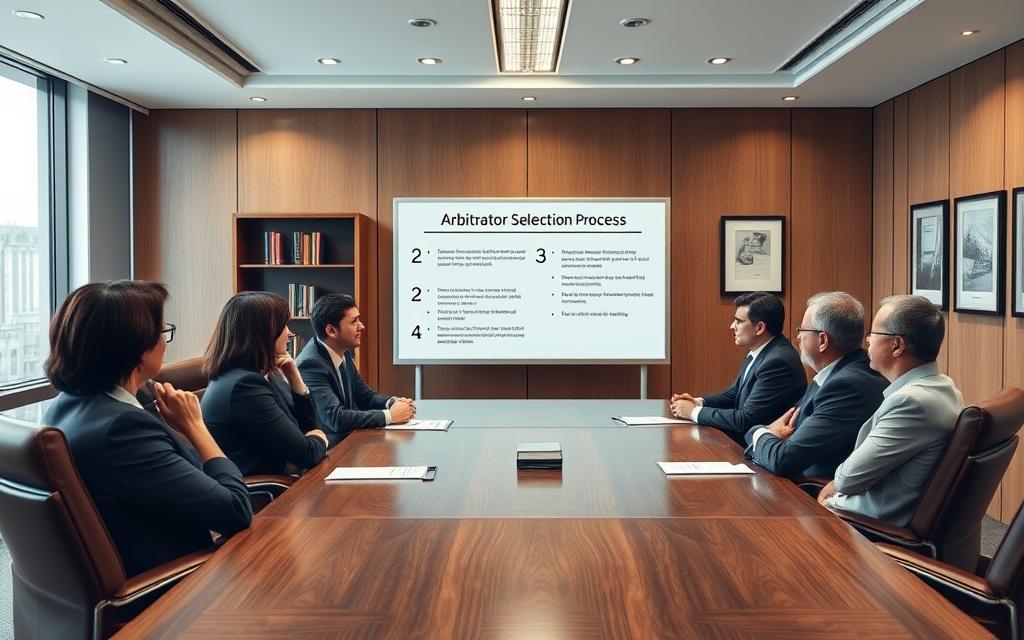
When picking an arbitrator, think carefully. Not all experts are good at solving legal problems.
Qualifications of an Arbitrator
Look for these key qualities in an arbitrator:
- Deep legal knowledge in your area of dispute
- A history of making fair decisions
- Advanced professional certifications
- Good understanding of industry standards
Importance of Neutrality
Being neutral is key in arbitration. Legal arbitration tips stress the need for an unbiased expert. They must look at evidence fairly.
| Neutrality Criteria | Key Considerations |
|---|---|
| Professional Independence | No ties to the parties involved |
| Conflict of Interest | Must clearly state any possible conflicts |
| Decision-Making History | Has made consistent, fair judgments |
Questions to Ask Arbitrators
- What experience do you have with similar disputes?
- Can you give references from past cases?
- How do you stay impartial?
- What’s your method for hearing and judging evidence?
Finding the right arbitrator takes effort and research. It’s important for a fair outcome.
Preparing for Arbitration
Getting ready for arbitration is very important. Knowing the steps to prepare can really help. You need to plan well, gather all your documents, and know how to share your story.
Strategic Document Collection
Collecting documents is key to your strategy. Make sure to get all relevant evidence that backs your side. This includes:
- Contracts and agreements
- Communication records
- Financial statements
- Expert reports
- Witness statements
Developing a Detailed Case Strategy
Your DIY guide should help you build a strong case. Look at your documents, find your main points, and think about what the other side might say. Arrange your evidence in order and pick the strongest parts.
Creating a Detailed Timeline
Arbitration tips say a clear timeline is vital. Here’s how to break down the process:
- Start with document prep
- Then, gather your evidence
- Next, review your case
- Refine your strategy
- End with submitting your documents
By following these steps, you’ll feel ready and clear for your hearing.
Conducting the Arbitration Hearing
The arbitration hearing is a key part of solving disputes. Everyone needs to get ready well to do well in this formal event. Knowing how the arbitration works can really help your case.
Good arbitration hearings need smart planning and clear talking. Everyone must share their points and proof clearly.
What to Expect During the Hearing
- Formal introduction by the arbitrator
- Opening statements from both parties
- Presentation of evidence and witnesses
- Cross-examination opportunities
- Closing arguments
Presenting Evidence and Arguments
It’s very important to present evidence well in arbitration. Organize your papers well and explain each one simply. Being clear and logical helps make your points strong.
Engaging with the Arbitrator
Talking well with the arbitrator is important. Be polite, answer questions straight, and show you know your case well.
Arbitration hearings need to be professional, well-prepared, and smart. By following these tips, everyone can share their views well and aim for a fair outcome.
Post-Hearing Procedures
After the intense arbitration process, parties reach a critical stage. The final arbitration outcome options become clear. The arbitration hearing concludes with a thorough evaluation of evidence and arguments.
Understanding arbitration settlements requires a close look at the award’s parts and what they mean. Arbitrators give their decision in a formal written document. This document outlines the main findings and the solution.
Receiving the Arbitration Award
The arbitration success strategy is to review the award well after getting it. Important things to check include:
- Detailed explanation of the arbitrator’s reasoning
- Specific monetary compensation or remedies
- Timeline for implementing the award
- Binding nature of the decision
Understanding the Finality of the Award
Arbitration awards have a lot of legal weight. Most awards are final and legally binding. This means courts usually enforce them without a lot of review. Parties need to know that challenging an award is very hard.
Options for Challenging the Award
Even though rare, some grounds exist for challenging an arbitration award:
- Proven arbitrator misconduct
- Evidence of fraud
- Arbitrator exceeded prescribed powers
- Fundamental procedural errors
Legal experts say to think carefully about challenging the award. Courts have a high bar for overturning arbitration decisions.
Arbitration Costs and Fees

Arbitration costs need careful planning. It’s less expensive than court but has big costs. Knowing these costs is key.
Legal tips for arbitration include:
- Arbitrator fees and compensation
- Administrative expenses
- Case complexity
- Duration of the arbitration process
- Legal representation costs
Breaking Down Arbitration Expenses
Expenses in arbitration vary a lot. They can be from $5,000 to $50,000. This depends on the case and the arbitration method.
Strategic Budgeting for Arbitration
Good financial planning is important. Here are steps to follow:
- Ask for fee details from arbitrators
- Guess how long arbitration will take
- Save for unexpected costs
- Compare costs from different providers
Cost-Saving Strategies
To save money, try these:
- Choose simple arbitration methods
- Reduce document discovery
- Get fixed-fee deals
- Think about mediation as a cheaper option
Knowing about arbitration costs helps make smart choices. It helps manage money well during disputes.
The Role of Legal Counsel in Arbitration
Arbitration can be hard to understand. Legal help is key in this complex world. Knowing when to get an attorney is important for success.
Getting legal advice is vital in many cases. Attorneys with experience can greatly help your chances of winning.
When to Seek Legal Representation
- Complex legal disputes involving significant financial stakes
- Cases with tricky technical or legal issues
- Situations needing smart legal arguments
- Big commercial or job conflicts
How an Attorney Can Enhance Your Arbitration Process
Legal tips say attorneys offer big help in:
- Strategic case preparation
- Checking all documents
- Creating strong arguments
- Getting good deals
Cost Considerations for Legal Representation
Legal help costs money, but it’s often worth it. Attorneys can:
- Lower financial risks
- Make arbitration smoother
- Boost chances of a good outcome
Choosing the right lawyer is important. Look at their skills, experience, and how they fit your budget.
Confidentiality in Arbitration

Arbitration is a private way to solve disputes. It keeps sensitive info and details private. This is different from public court cases.
Arbitration is great for keeping business and personal stuff secret. It stops media and others from knowing about disputes.
Why Confidentiality Matters
Confidentiality in arbitration is very important for several reasons:
- It protects trade secrets
- It keeps business reputations safe
- It helps avoid damage to reputation
- It helps keep professional relationships strong
Crafting Confidentiality Agreements
Good confidentiality agreements cover a few key points:
- What info stays private
- How long it stays private
- What happens if someone breaks the agreement
- When it’s okay to share info
Key Exceptions to Confidentiality
Not all arbitration stays secret. Some laws require sharing info, like:
- Legal investigations
- Following rules
- Orders from courts
- When both sides agree
Knowing about these exceptions helps people decide if arbitration is right for them.
The Influence of Arbitration Clauses
Arbitration clauses are key in contract disputes. They help solve legal problems outside of court. Knowing about arbitration agreements can save businesses time and money.
Getting through contract arbitration advice needs careful thought. There are important elements that affect how disputes are solved.
Drafting Effective Arbitration Clauses
Making a strong arbitration agreement needs careful planning. Good clauses have:
- Clear scope of disputes
- Specific rules and procedures
- How to pick neutral arbitrators
- Where to hold the arbitration
Enforceability of Arbitration Agreements
Not all arbitration clauses are the same. Advice on contract arbitration focuses on key points for legal strength:
- Everyone must agree
- Language must be clear and fair
- Procedures must be fair
- Rules must follow state and federal laws
Common Pitfalls to Avoid
When making arbitration agreements, watch out for risks. Understanding arbitration clauses means avoiding mistakes like:
- Language that’s too complex or unclear
- Terms that favor one side too much
- Not saying how disputes will be solved
- Ignoring legal challenges
Getting help with arbitration agreements is key for businesses. They want quick, cost-effective ways to solve disputes. This helps keep their interests safe while keeping relationships professional.
Arbitration in Various Industries
Arbitration is key in many fields. It helps solve problems quickly and quietly. It also brings in experts who know the field well.
Each industry uses arbitration in its own way. It helps solve problems fast and cheaply. This is better than going to court.
Corporate Disputes
Arbitration is great for big business problems. It works well because:
- It’s faster than court
- It costs less
- You can pick the right expert
- It keeps things private
Construction Arbitration
Building projects often have tricky problems. Arbitration helps with these issues. It’s good because:
- Experts know the technical stuff
- It solves problems quickly
- It doesn’t slow down the project
- It’s flexible
Employment Arbitration
Arbitration helps with work problems. It’s good for businesses because:
- It keeps problems private
- It keeps things professional
- It protects company secrets
- It finds fair solutions
Knowing how to use arbitration in each field helps businesses. It keeps them safe and fair.
The Future of Arbitration
The world of solving disputes is changing fast. New tech and laws are making arbitration better. Now, businesses and people can solve problems in new ways.
The digital evolution of arbitration brings new chances for solving disputes better and clearer.
Emerging Trends in Arbitration Practices
Some big trends are shaping arbitration’s future:
- More use of digital platforms
- AI helping with case management
- Being able to hear cases remotely
- Clearer arbitration rules
Technological Innovations
Technology is changing how we solve disputes. AI and machine learning are making things faster and smarter. They help with:
- Quick document checks
- Smart case predictions
- Handling procedures automatically
Evolving Legal Standards
Laws are keeping up with new tech. The UK Arbitration Bill shows a big push to update how we solve disputes.
| Technology | Impact on Arbitration |
|---|---|
| AI Case Management | Reduces processing time by 40% |
| Online Dispute Resolution | Increases accessibility and efficiency |
| Blockchain Verification | Enhances document authenticity |
The future of arbitration is about using new tech while keeping fairness and neutrality at the heart.
Alternatives to Arbitration
There are many ways to solve conflicts. Arbitration is one, but there are others too. Each has its own benefits for different situations.
Experts say no one method works for everyone. Knowing the differences between negotiation, mediation, litigation, and arbitration helps choose the best one.
Mediation: A Collaborative Approach
Mediation is a team effort. A neutral person helps talk things out between two sides. It’s different from arbitration because both sides make their own deal.
- Allows direct communication between parties
- Maintains confidentiality
- Typically less expensive than litigation
- Preserves relationships
Litigation: Traditional Legal Resolution
Litigation is the most formal way to solve disputes. It happens in court where a judge makes a final decision. This is based on the evidence and arguments.
- Formal legal process
- Public court records
- Enforceable judicial decisions
- Complex legal standards apply
Hybrid Processes: Flexible Solutions
New ways mix different methods together. Hybrid processes like med-arb use parts of mediation and arbitration. They offer flexible solutions for each conflict.
Choosing the right way to solve a dispute depends on many things. These include how complex it is, the relationship between the parties, money, and what you want to happen. Getting help from experts is key to making the right choice.
Resources for Further Learning
Learning more about arbitration is easy. You can find many ways to learn about arbitration basics. These ways help you understand this important way to solve disputes.
Exploring arbitration means finding good learning resources. These resources give you both practical and theoretical knowledge.
Essential Books on Arbitration
Looking for a DIY guide on arbitration? There are great books to help you:
- *Arbitration in Practice* by Stephen Hayford
- *The Art of Negotiation and Dispute Resolution* by Michael Wheeler
- *International Commercial Arbitration* by Gary Born
Online Courses and Webinars
Online learning has changed how we learn about arbitration. Sites like Coursera and edX have great courses on arbitration training. They are good for all levels.
Professional Associations and Networks
Joining professional networks can really help you learn about arbitration:
- American Arbitration Association
- International Center for Dispute Resolution
- FINRA Dispute Resolution Services
Using these resources will make you understand arbitration better. You’ll go from just knowing about it to using it in real life.
Conclusion: Mastering the Art of Arbitration
To do arbitration well, you need a smart plan. This plan should include knowing a lot, being well-prepared, and being good at it. The guide we looked at shows that solving disputes is more than just knowing the law.
People who are great at arbitration spend a lot of time learning. They keep getting better by going to school, preparing well, and understanding both laws and how to talk things out. Every case is different, so they have to be ready to think on their feet.
Getting good at arbitration takes time. You should keep learning, meet other experts, and know about new laws. By always learning and preparing, you can make arbitration a good way to solve problems.
Mastering arbitration means using a complete approach. This includes knowing the law, talking well, and solving problems smartly. No matter what you do, being ready, clear, and fair is key.