
Difference Between SSDI and SSI: Clear Breakdown of Benefits
Do you find it hard to tell SSDI and SSI apart? Many Americans get confused. This can lead to missing out on important financial help they really need.
The world of disability benefits is complex. SSDI and SSI both help people with disabilities. But they have different rules and who can get them.
This guide will help you see the big differences between SSDI and SSI. We’ll look at the Social Security disability programs. This way, you can make smart choices about your money.
Key Takeaways
- SSDI and SSI are two separate Social Security disability programs
- SSDI requires work history, while SSI does not
- Funding sources differ for each program
- Eligibility criteria vary between SSDI and SSI
- Understanding these differences can help maximize your benefits
Understanding SSDI: Social Security Disability Insurance
Social Security Disability Insurance (SSDI) is a safety net for workers with big disabilities. It gives money to those who have worked and paid into the Social Security system.
The SSDI program rewards workers who paid Social Security taxes. To get SSDI, you must meet certain rules set by the Social Security Administration.
What Exactly is SSDI?
SSDI is a federal program that helps workers with long-term disabilities. It gives monthly money to those who can’t work anymore. SSDI is based on how much you worked and earned.
Key SSDI Eligibility Rules
- Must have worked long enough to accumulate sufficient work credits
- Experience a medical condition expected to last at least 12 months
- Unable to perform substantial gainful activity
- Meet the Social Security Administration’s strict disability definitions
Benefits Offered by SSDI
SSDI gives important financial help with monthly payments. The amount you get depends on your earnings. Eligible recipients may also qualify for Medicare after a 24-month waiting period.
Navigating the SSDI Application Process
- Gather all your medical records
- Fill out the official disability application
- Send in all your medical proof
- Wait for the Social Security Administration to review it
SSDI can be hard to understand, but knowing the rules helps protect your money when things get tough.
Understanding SSI: Supplemental Security Income
Supplemental Security Income (SSI) is a big help for people who are really struggling. It’s a federal program that gives support to those with little money and resources. It helps people who find it hard to afford basic things.
SSI is a safety net for many, like the disabled, seniors, and those with very low income. It’s different from other social security programs because it focuses on financial need.
What is SSI?
SSI is a program run by the Social Security Administration. It gives monthly money to help with basic needs like food, clothes, and a place to live. It’s for people with disabilities, seniors, and those with very low income.
SSI Disability Requirements
To get SSI, you must meet certain rules. These include:
- Having a disability that’s recognized by doctors
- Showing you have big problems with daily tasks
- Having income that’s below what the government says is okay
Benefits Offered by SSI
SSI helps low-income people in many ways. It includes:
- Monthly money to help
- Extra money from the state
- Getting Medicaid automatically
Application Process for SSI
Getting SSI means you have to share a lot of information. You’ll need to show your medical records, how much money you make, and your personal situation. This helps decide if you can get SSI.
Key Differences Between SSDI and SSI
Understanding federal disability programs can be hard. Knowing the differences between Social Security Disability Insurance (SSDI) and Supplemental Security Income (SSI) is key. It helps people make smart choices about government disability.
SSDI and SSI are not the same. They have different rules for who can get them, how they are funded, and what benefits they offer.
Funding Sources for SSDI vs. SSI
SSDI and SSI have different ways of getting money:
- SSDI: Money comes from taxes paid by workers when they work.
- SSI: Money comes from general taxes.
Work History Requirement for SSDI
SSDI needs a lot of work history. You must have:
- Enough work credits
- Worked recently before getting sick
- Medical proof of being disabled
Income and Asset Limits for SSI
SSI is for those with little money. It has strict rules on income and assets. This is to help those who really need it.
| Program | Income Limit | Asset Limit |
|---|---|---|
| SSDI | No strict limit | Not applicable |
| SSI | Restricted | $2,000 (individual) |
These differences show why SSDI and SSI are for different people. They help figure out which one is best for you.
How Benefits are Calculated for SSDI and SSI
It’s important to know how disability support works. This is true if you’re looking for help from Social Security. SSDI and SSI have different ways to figure out your benefits.
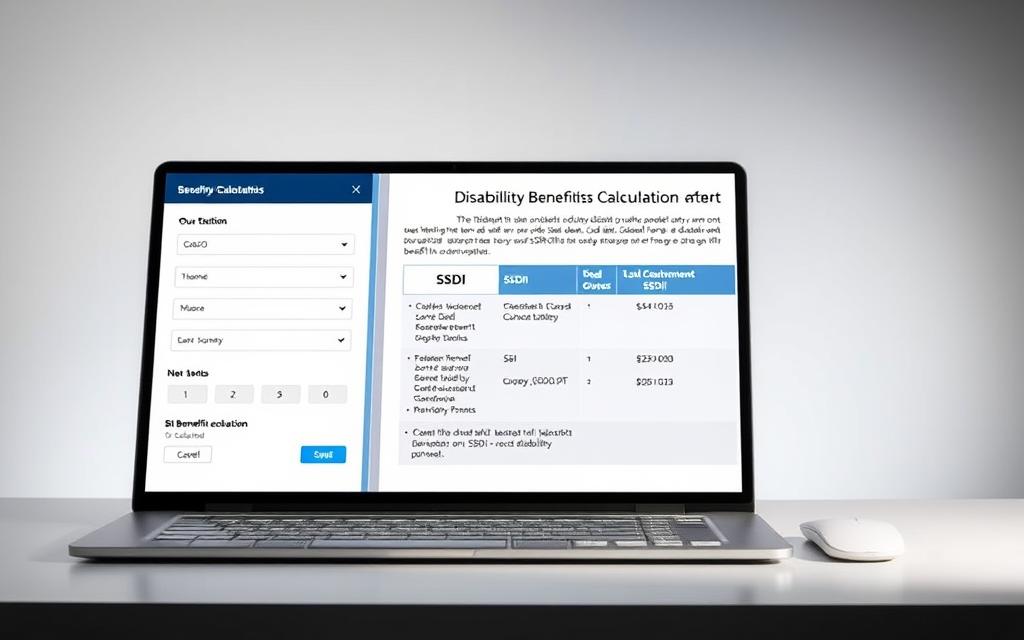
SSDI and SSI have their own ways to figure out how much you get. These methods are based on many factors. Each program has its own rules.
Calculating SSDI Monthly Payment
Your SSDI payment is based on how much you earned over your lifetime. Important things to consider are:
- Average Indexed Monthly Earnings (AIME)
- Years of work history
- Total lifetime earnings
The Social Security Administration uses a special formula. This formula turns your work history into a Primary Insurance Amount (PIA). This makes sure your benefits match what you put into the system.
SSI Benefit Calculation Method
SSI works differently for people with little income and resources. The SSI asset limit is key to figuring out if you qualify and how much you get:
- Federal benefit rate set at $943 for individuals in 2024
- Maximum benefit of $1,415 for couples
- Adjustments based on other income sources
Impact of Additional Income on Benefits
Both SSDI and SSI can change if you have other income. The comparison shows that:
- Earned income may reduce SSI payments
- SSDI has special work incentives
- It’s important to report all income for correct calculations
Understanding these complex rules is key. It helps you get the right benefits from each program.
How Long Does It Take to Receive Benefits?
Understanding the Social Security benefits guide can be tough. It’s hard to know how long it takes for disability claims. The wait from applying to getting benefits can be long for many.
Disability claims go through many steps. This affects how long it takes. Several important factors play a role in the wait time.
SSDI Processing Timeframes
SSDI applications usually take 3-5 months to review first. The process has several steps:
- Medical records evaluation
- Disability determination review
- Verification of work history
- Comprehensive medical assessment
SSI Processing Considerations
SSI applications might take a bit longer. This is because of financial checks. Complex financial documents can make it take longer.
Factors Influencing Processing Times
Many things can make your claim go faster or slower:
- Completeness of medical documentation
- Complexity of medical condition
- Current Social Security Administration workload
- Accuracy of initial application submission
To speed up your claim, make sure your documents are complete and correct. Also, answer any extra questions quickly.
Can You Receive Both SSDI and SSI?
Understanding Social Security income types can be tricky. Some people can get both Social Security Disability Insurance (SSDI) and Supplemental Security Income (SSI). This helps those with big disabilities a lot.
Getting both SSDI and SSI depends on certain rules. Not everyone can get both. But, some situations make it possible.
Eligibility for Concurrent Benefits
To get both benefits, you must meet two big rules:
- Qualify for SSDI because of your work and disability
- Have very little income and resources to meet SSI standards
How Benefits are Structured
When you get both benefits, the Social Security Administration is careful with payments. Your SSDI is the main payment. SSI might add more money to your income.
| Benefit Type | Primary Purpose | Maximum Monthly Payment |
|---|---|---|
| SSDI | Work-based disability support | $3,148 (2024 maximum) |
| SSI | Need-based financial assistance | $914 for individuals |
Implications of Receiving Both
Getting both benefits can give critical financial stability to those with disabilities. It helps pay for living costs and medical needs.
- Potential access to Medicare and Medicaid
- More money to help beyond just disability payments
- Full support for those with big disabilities
Impact of Work on SSDI and SSI Benefits
Going back to work can be tough for those on disability. It’s key to know the SSDI rules and SSI income limits. This helps keep your money safe while you look for jobs.
There are big differences between SSDI and SSI when working and getting benefits.
Trial Work Period for SSDI
The SSDI program lets you try working again:
- You can earn any amount for nine months without losing benefits.
- These months don’t have to be together.
- It helps you slowly get back to work.
Income Limits for SSI Recipients
SSI has strict rules about how much you can earn:
- Your earned income is checked closely.
- Benefits go down as you earn more.
- Some income might not count towards this.
Consequences of Exceeding Work Limits
Be careful not to earn too much or you might lose benefits:
- Earning too much can cut your benefits.
- In some cases, you might lose all benefits.
- It’s important to keep track of your income.
Talk to Social Security to understand your situation. This way, you can keep your benefits while looking for work.
Common Misconceptions About SSDI and SSI
Understanding Social Security benefits can be tough. This is because of wrong information about SSDI and SSI. Many people get confused, which can hurt their chances of getting benefits.
Disability programs are very detailed. They have many rules that surprise people. Knowing these rules can help you get benefits.
Myths About SSDI Eligibility
- Not every medical condition automatically qualifies for SSDI
- Having a disability does not guarantee immediate approval
- Work history plays a critical role in SSDI eligibility
Common SSI Benefit Misconceptions
People often get SSI wrong. Some big mistakes include:
- Thinking SSI pays the same to everyone
- Believing you can’t get SSI if you own assets
- Assuming SSI has no limits
Debunking Program Myths
The Social Security Administration (SSA) has clear rules for disability claims. It’s important to have the right documents and know the rules well.
| Misconception | Reality |
|---|---|
| Disability automatically means benefits | Strict medical and work criteria must be met |
| Benefits cannot be received while working | Partial work and benefits are possible under specific conditions |
| Doctor’s statement guarantees approval | SSA conducts independent medical evaluations |
Getting help from experts can make a big difference. They can guide you through SSDI and SSI rules.
Changes in Laws Affecting SSDI and SSI
Federal disability programs like SSDI and SSI are always changing. They try to meet the needs of Americans with disabilities. New laws have big effects on Social Security income types and benefits.
Navigating Recent Legislative Landscape
The Social Security Administration has made big updates to SSDI vs SSI benefits. These updates aim to make applying easier and help more people with disabilities.
- Modernized medical evaluation criteria
- Enhanced digital application platforms
- Expanded qualifying conditions for disability
Key Impacts on Disability Benefits
New laws have changed how programs decide who gets benefits and how much. People getting benefits should know about these changes. They might affect their benefits now or in the future.
Future Considerations
There are signs that disability benefits will keep getting better. We might see:
- More use of technology
- Flexible work programs
- Coverage for new medical conditions
It’s important to stay up to date with Social Security disability benefits.
Advocating for Fair Benefits
Getting disability support can be hard. Knowing where to get help is key. It can help you get SSDI or SSI benefits.

Advocacy is very important. It helps you know your rights. It also helps you get disability support.
Role of Advocacy Organizations
Advocacy groups help a lot. They guide you through SSDI and SSI. They offer:
- Free legal consultations
- Help with application prep
- Support for appeals
- Workshops and resources
Resources for Applicants
There are many resources for you:
| Resource Type | Description | Contact Method |
|---|---|---|
| Disability Rights Organizations | Legal help and support | Online and phone |
| Social Security Administration | Official help and application support | Local offices and website |
| Community Support Groups | Support from others | Local meetings and online forums |
Importance of Legal Representation
Having a lawyer can really help. Specialized disability attorneys know a lot about disability laws. They can:
- Help gather medical records
- Guide you through the application
- Prepare for appeals
- Help you get the most benefits
Using these resources can make you feel more confident. You can prepare well for your disability claim.
Tips for Successfully Applying for Benefits
Going through the Social Security benefits guide can be tough. It’s even harder when you’re dealing with different disability claims. Getting ready is important to boost your approval chances.
Gathering Complete Documentation
Good disability claims need lots of paperwork. Make a big file with:
- Complete medical records from all doctors
- Detailed test results
- Notes from mental health treatments
- Lists of all medicines
- Reports from work ability tests
Completing Application Forms with Care
Being precise is key when filling out disability forms. Make sure to check every detail. Look over all info for:
- Right spelling of names and addresses
- Exact dates of medical visits
- Clear descriptions of health issues
- Full work history
Preparing for Interviews and Appeals
Be ready to talk about how your health affects your job. Practice explaining your limits well. Keep your medical records in order and be ready to add more if asked.
Remember, the Social Security Administration likes detailed, well-prepared applications. Spending time to get ready can really help you get the disability benefits you need.
Frequently Asked Questions (FAQs) About Disability Benefits
Understanding SSDI rules and SSI needs can be tough. This part answers common questions about disability support and benefits.
What Happens if Your Application is Denied?
Getting a denial doesn’t mean you’re out. The Social Security Administration (SSA) has an appeals process. You have 60 days to appeal after you get denied.
- Request a reconsideration of your original application
- Gather additional medical evidence
- Prepare for a possible hearing with an administrative law judge
Can Your Benefits Be Reevaluated?
The SSA checks on disability cases often. Disability support comparison looks at your health and work ability. They review cases:
- Every 3 years for conditions that might get better
- Every 5-7 years for stable conditions
- Rarely for permanent disabilities
What to Do if You Experience Changes in Condition
Changes in your health can affect your benefits. It’s important to tell the SSA about any big changes right away. This makes sure you get the right support.
Here’s what to do:
- Keep records of medical changes
- Talk to the SSA
- Update your medical records
Real-Life Stories of SSDI and SSI Recipients
Getting help from disability programs can be tough. But, real stories show how SSDI and SSI change lives. They tell us about the human side of getting help.
People’s journeys with disability benefits are full of courage. Each story shows different struggles and wins. They show how important financial help is.
Overcoming Obstacles: SSDI Success Stories
- Maria, a former construction worker, got SSDI after an injury
- She used disability support to start over after a bad back
- Her story teaches us about the need for good records and not giving up
SSI: Bridging Financial Gaps
SSI helps those with low income a lot. Personal stories show how these benefits keep people stable when they can’t work because of health issues.
- David, with a chronic illness, gets by on SSI for his needs
- The program helped him keep his head up during tough times
- His story shows how important support systems are
Lessons from Disability Support Journeys
Important lessons come from these stories:
- Having good medical records is key
- Never give up on applying for benefits
- Having support can really change lives
These stories show that disability programs are more than money. They offer hope, strength, and chances for those facing big challenges.
Conclusion: Making an Informed Choice Between SSDI and SSI
Choosing between SSDI and SSI can be hard. It’s important to know what each program offers. This helps you pick the best one for you.
When picking Social Security benefits, look at many things. Some people can get one or both programs. Your work history, income, and health matter a lot.
Getting help from experts is a good idea. Disability lawyers or Social Security reps can guide you. They know a lot about getting benefits.
Applying for Social Security is just the start. Keep an eye on your health, job, and money. Changing your plan as needed can help you get the right help.