
Can I Put My House in a Trust Without a Lawyer?
What if you could shield your family from lengthy court battles without paying legal fees? Many homeowners ask this question as they explore alternatives to traditional estate planning. Transferring property into a living trust offers a proven path to bypass probate – but is professional guidance truly optional?
Estate planning experts like Lincoln & Wenk, PLLC emphasize that trusts provide three key advantages: privacy preservation, asset control, and probate avoidance. When properly structured, these legal tools let families inherit property faster while maintaining decision-making power during the grantor’s lifetime.
State-specific requirements create hidden challenges for DIY enthusiasts. Arizona’s community property laws differ sharply from Florida’s homestead protections, for example. Titling errors or incomplete documentation could invalidate your entire arrangement – leaving heirs stuck in probate court.
While online templates simplify trust creation, critical steps like funding the trust demand precision. You must record new deeds, update beneficiary designations, and appoint a reliable trustee. One missed detail might force your family to hire attorneys anyway – at greater expense.
Key Takeaways
- Living trusts bypass probate but require strict adherence to state laws
- Proper property titling determines trust validity
- DIY options exist but carry higher risk of errors
- Trustees manage assets per your written instructions
- Legal review prevents costly post-mortem disputes
Understanding Living Trusts and Estate Planning Basics
Estate planning tools like revocable living trusts offer families more control than traditional methods. These legal arrangements let you manage assets during your lifetime while preparing for smooth transitions later.
Advantages of a Revocable Living Trust
A revocable living trust avoids probate – the court process that validates wills. This saves heirs months of delays and public scrutiny. Privacy remains intact since trust details stay confidential, unlike wills which become court records.
You keep full control as the grantor. Modify terms or remove assets anytime. This flexibility helps adapt to life changes like marriages or new property purchases.
How Trusts Differ from Wills
Wills only take effect after death and require probate. Trusts operate immediately, covering incapacity scenarios too. Both tools need proper execution, but trusts demand ongoing management.
| Feature | Revocable Trust | Standard Will |
|---|---|---|
| Probate Requirement | No | Yes |
| Privacy Level | High | Low |
| Amendment Flexibility | Anytime | Requires redrafting |
| Incapacity Coverage | Yes | No |
The grantor appoints a trustee to manage assets per the trust agreement. Successor trustees step in if the original becomes unable to serve. This layered control prevents family disputes over asset distribution.
While estate planning with trusts requires upfront effort, it reduces long-term legal burdens. Proper documentation ensures your wishes get followed exactly – without court interference.
Step-by-Step Process to Create a DIY Trust

Building a trust independently demands meticulous preparation but offers financial flexibility. Online platforms like LegalZoom simplify the process through guided templates – if you understand the risks and requirements.
Gathering Necessary Documents and Information
Start by collecting ownership records for all assets. Essential documents include property deeds, vehicle titles, and financial account statements. Confirm beneficiary details for retirement accounts to prevent conflicts.
Follow this seven-step sequence:
- List all assets requiring protection
- Choose successor trustees and beneficiaries
- Verify state-specific notary witness requirements
- Complete trust agreement templates accurately
- Transfer property titles to the trust
- Sign documents before a notary public
- Store originals in fireproof storage
Drafting and Notarizing Your Trust Agreement
Clear identification of roles prevents future disputes. Name the grantor (you), trustee (manager), and beneficiaries explicitly. Most states require two witnesses during notarization beyond the grantor’s signature.
| Aspect | DIY Trust | Attorney-Assisted |
|---|---|---|
| Cost | $200-$500 | $1,500-$3,000 |
| Time Investment | 8-12 hours | 3-5 hours |
| Customization | Limited | High |
| Error Risk | Moderate | Low |
While creating a trust without attorney involvement saves money, complex family situations often require professional review. Simple estates with straightforward assets work best for self-guided setups.
Update your living trust whenever acquiring new property or experiencing major life changes. Annual reviews ensure your instructions remain current and legally enforceable.
Key Considerations for Transferring Property into a Trust
Retitling real estate requires precision to maintain legal validity. Proper documentation ensures your trust holds enforceable ownership rights while avoiding probate complications.
Transferring the Deed and Title
Creating a new deed is the cornerstone of asset protection. Most states require grant deeds or quitclaim documents listing the trust as owner. Legal descriptions must match county records exactly – even minor errors invalidate transfers.
Follow these steps for error-free execution:
- Prepare the deed using official county templates
- Sign before a notary public with witnesses
- File the document with the local recorder’s office
Title companies report 12% of DIY transfers face delays due to incorrect legal descriptions or outstanding liens. Always request a preliminary title report before filing.
| Deed Type | Best For | Risk Level |
|---|---|---|
| Quitclaim | Family transfers | Moderate |
| Grant | Arm’s-length sales | Low |
| Warranty | Commercial property | Minimal |
Managing Real Estate within the Trust
Maintain separate insurance policies under the trust’s name. Lenders may require updated mortgage agreements if transferring financed property. Conduct annual title checks to confirm ownership status remains unchanged.
Rental properties need special attention. Trustees must keep income separate from personal accounts. Update lease agreements to reflect the trust as landlord. These steps prevent legal challenges from tenants or creditors.
Experts recommend filing certified copies of recorded deeds with successor trustees. This practice eliminates confusion during transitions while protecting your real estate legacy.
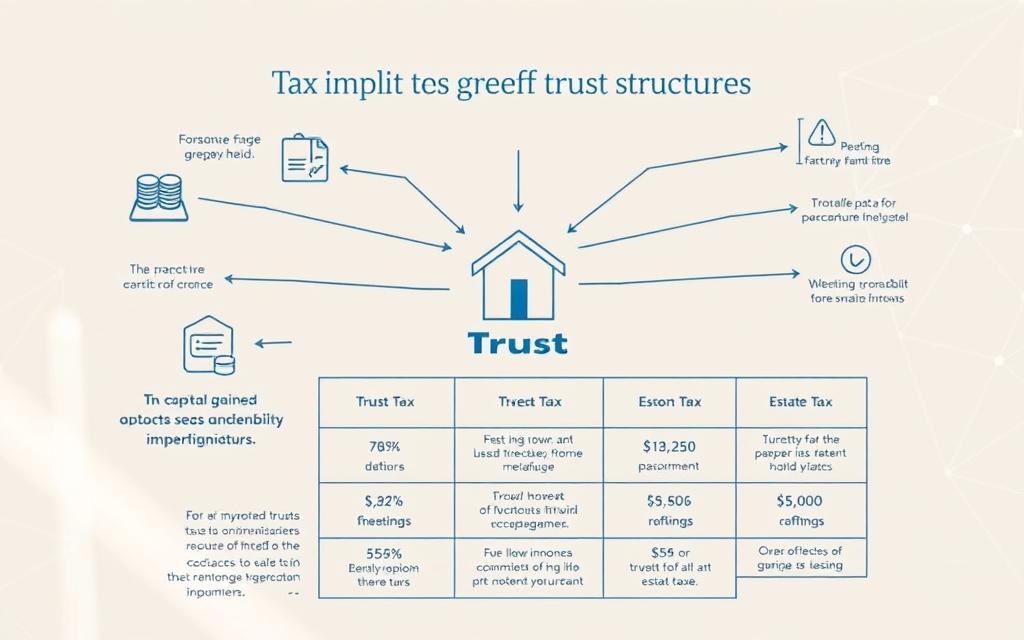
Evaluating Legal and Tax Implications
State laws and federal tax codes shape every trust’s effectiveness. A revocable living trust in New York faces different validation rules than one in Nevada – these variations determine whether your estate plan succeeds or fails.
Understanding State-Specific Requirements
California demands notarized signatures for trust amendments. Texas requires separate documentation for community property transfers. Key differences include:
- Witness requirements (1-3 people)
- Recording fees for real estate transfers
- Deadlines for contesting trust validity
Ohio recently reduced inheritance taxes for trusts holding farmland. Such state-level changes impact long-term planning strategies. Always verify current laws before finalizing documents.
Estate Taxes and Trust Funding Considerations
Revocable trusts don’t shield assets from federal estate taxes. However, proper funding can minimize tax burdens through:
- Strategic asset allocation
- Annual exclusion gifts
- Charitable remainder provisions
A $2 million estate might owe $0 in federal taxes but face 12% state inheritance levies. Medi-Cal planning strategies often integrate with trusts to protect assets while maintaining eligibility for benefits.
| State | Estate Tax Threshold | Inheritance Tax Rate |
|---|---|---|
| Pennsylvania | $0 | 4.5-15% |
| Washington | $2.193M | 10-20% |
| Florida | None | None |
An estate planning attorney can identify overlooked deductions. One Arizona family saved $48,000 in potential taxes by restructuring their trust’s charitable provisions. Timely updates ensure compliance as laws evolve.
Addressing Complex Estate Planning Scenarios
Modern families often face intricate estate challenges requiring customized solutions. Living trusts adapt well to multi-property portfolios and diverse beneficiary needs when structured thoughtfully.
Managing Multiple Properties and Beneficiaries
Owners with vacation homes or rental units need specific distribution plans. A successor trustee might stagger inheritance payouts or create usage schedules for shared properties. Clear instructions prevent sibling disputes over lake houses or income-generating assets.
| Property Type | Common Solution | Potential Conflict |
|---|---|---|
| Vacation Home | Shared usage calendar | Maintenance costs |
| Rental Property | Professional management | Profit distribution |
| Farmland | LLC ownership | Crop revenue splits |
Protecting Blended Families and Minors
Second marriages with children from prior relationships demand precise trust language. One Arizona case required a planning attorney to create separate inheritance tiers protecting biological children and stepchildren equally.
Minors need third-party managers until age 25 in most states. Loved ones often serve as custodians, overseeing trust distributions for education and healthcare needs. Annual reviews ensure provisions align with changing family dynamics.
Complex estates benefit from professional guidance. A Florida widow avoided $300,000 in legal fees by updating her estate plan after adopting grandchildren. Regular updates and clear communication keep family harmony intact during transitions.
Exploring DIY Trust Options versus Professional Guidance
Self-guided trust formation offers cost savings but demands meticulous attention to legal details. Households with straightforward assets might successfully navigate the process, while complex estates often require expert oversight.

Pros and Cons of a Trust Without Attorney Involvement
Creating a trust without professional help typically costs 75% less than hiring legal counsel. Online platforms provide templates for under $500, compared to $3,000+ for full-service estate planning. However, 23% of DIY trusts face challenges during asset distribution due to unclear wording.
| Aspect | DIY Approach | Attorney Assistance |
|---|---|---|
| Average Cost | $200-$700 | $1,800-$4,000 |
| State Law Compliance | Self-verified | Guaranteed |
| Tax Optimization | Basic | Strategic |
| Dispute Protection | Limited | Comprehensive |
Consider professional guidance if your estate includes:
- Properties in multiple states
- Business ownership interests
- Beneficiaries with special needs
A California family saved $12,000 in probate fees using DIY templates but later paid $8,000 to fix improper deed transfers. Regular document reviews by a lawyer can catch errors before they become costly problems.
For simple estates, thorough research and precise execution make trusts without attorney involvement viable. Always verify state-specific signing requirements and update beneficiary designations immediately after funding the trust.
Can I Put My House in a Trust Without a Lawyer?
Establishing a trust independently presents unique hurdles that demand careful navigation. Over 30% of DIY trusts encounter issues during asset distribution due to documentation gaps or state law misunderstandings. Proper planning and execution remain critical to avoid unintended probate court involvement.
Navigating Documentation Pitfalls
Incorrect deed transfers rank among the most common errors. A Texas family nearly lost their ranch because their quitclaim deed omitted the legal property description. They corrected the error by:
- Requesting a certified title report
- Refiling documents with precise legal language
- Updating trustee contact information
Maintaining control requires meticulous updates after major life events. Births, divorces, or property acquisitions necessitate immediate trust amendments. Annual reviews help align your plan with current laws and family needs.
| Error Type | Potential Consequence | Prevention Strategy |
|---|---|---|
| Incomplete Funding | Assets enter probate | Verify titling for all properties |
| Vague Beneficiary Terms | Family disputes | Specify percentages and contingencies |
| Expired Trustee Designations | Court-appointed managers | Name secondary successors |
Successful DIY setups share three traits: thorough research, precise execution, and proactive maintenance. An Ohio widow avoided probate entirely by using online templates paired with county recorder verification. Her clear instructions enabled heirs to distribute assets within 14 days of her death.
While self-guided trust creation works for simple estates, complex situations often require professional review. Balance cost savings against potential risks to ensure your legacy remains protected.
Conclusion
Securing your legacy demands precision whether managing estate plans independently or with professional support. Properly transferring assets into trusts requires meticulous attention to state requirements and documentation – one oversight could undo years of preparation.
DIY solutions work best for straightforward estates but carry risks. Periodic legal reviews catch evolving tax rules or family changes. Successor trustees need clear instructions to manage properties effectively when the time comes.
Retitling physical assets correctly remains critical. Verify deeds match trust language exactly to prevent probate delays. A properly structured trust shields loved ones from court battles while preserving control over your estate.
Every choice balances cost savings against potential challenges. Simple estates might thrive with self-guided tools, while complex portfolios often benefit from expert oversight. Update documents after major life events to maintain alignment with your wishes.
Ultimately, whether crafting trusts independently or collaborating with professionals, clarity and compliance protect what matters most. Your planning today determines how smoothly ones you cherish inherit tomorrow.