
Can I Call the Police for Unauthorized Landlord Entry?
Renters often face uncertainty when their living space feels invaded. How far can property owners legally go when accessing rented units? While most landlords respect privacy, disputes over unauthorized entry spark urgent questions about rights and remedies.
State laws like California’s Civil Code Section 1954 mandate 24-hour written notice for non-emergency visits. Valid reasons include repairs, inspections, or showings to prospective tenants. Emergencies like fires or burst pipes allow immediate access without warning.
Tenants frequently wonder: At what point does a landlord’s action justify contacting authorities? Documentation proves critical. Recording incidents, reviewing lease terms, and communicating concerns in writing establish accountability. While police involvement remains rare, it may apply during repeated violations or threats to safety.
Key Takeaways
- Landlords must provide advance notice except during emergencies
- Valid entry reasons include repairs, inspections, and showings
- Keep records of all unauthorized access attempts
- Formal complaints should follow documented communication
- Legal recourse exists for repeated privacy violations
Understanding these protections helps renters balance their right to privacy with a property owner’s maintenance responsibilities. The following sections detail practical steps to address unauthorized entry while maintaining positive landlord-tenant relationships.
Understanding the Legal Framework for Landlord Entry
Legal guidelines protect renters by defining when and how property owners may access leased premises. These rules balance tenant privacy with a landlord’s duty to maintain properties effectively.
Key Statutes and Written Notice Requirements
California’s Civil Code Section 1954 requires landlords to provide 24-hour written notice before entering a rental unit. Valid reasons include:
- Scheduled maintenance or repairs
- Property inspections
- Showing the unit to prospective tenants
Notices must specify the exact date, time, and purpose of entry. Tenants can request rescheduling if the proposed timing conflicts with work hours or personal commitments.
Interpreting Civil Code 1954
The law permits entry only during normal business hours unless otherwise agreed. Landlords cannot:
- Visit excessively without justification
- Enter for non-approved reasons
- Ignore written communication from tenants
Emergency situations like gas leaks or flooding override notice requirements. Court-ordered access also allows immediate entry without tenant approval. Always cross-check lease agreements with state laws, as contracts cannot override statutory rights.
When Can Landlords Enter Without Notice?
Property access rules spark confusion when immediate action seems necessary. State laws outline specific scenarios where advance notice isn’t required, balancing tenant privacy with property safety.

Emergency Situations and Immediate Threats
Emergencies allow immediate entry to prevent harm or major damage. Examples include:
- Active fires or smoke detection
- Burst pipes flooding units below
- Gas leaks requiring urgent shutoff
California courts recognize these as valid exceptions to standard notice rules. Landlords must still notify tenants afterward about the reason for entry.
Scheduled Repairs and Routine Inspections
Non-emergency visits follow stricter guidelines. Arizona requires 48-hour notices for maintenance, while Texas mandates 24 hours. Nevada permits same-day access if both parties agree in writing.
Document every entry attempt. Note dates, times, and reasons in a logbook or digital file. This creates evidence if disputes arise over repeated unannounced visits.
can i call the police if my landlord enters without permission
Tenants may feel their privacy boundaries crossed when property access occurs unexpectedly. Knowing how to identify improper entry and respond effectively protects both rights and peace of mind.
Recognizing Unauthorized Entry
Legitimate access requires either advance notice or emergency justification. Red flags include:
- No written notification 24-48 hours before non-urgent visits
- Entry during late-night hours without tenant approval
- Repeated visits for vague or unnecessary reasons
| Authorized Access | Unauthorized Access | Action Required |
|---|---|---|
| 24-hour notice provided | No prior communication | Request written explanation |
| Emergency repair needed | Personal item inspection | Document details immediately |
| Scheduled showing | Frequent unannounced visits | Send formal complaint letter |
Documenting and Reporting the Incident
Capture proof through timestamps, photos of disturbed belongings, or witness accounts. Send a dated letter to the property owner outlining the violation. Keep copies of all communication, including emails or texts.
In cases involving threats or repeated intrusions, contact local authorities. Officers can issue trespass warnings if owners refuse to leave. For ongoing issues, consult a tenant rights attorney to explore lease breach claims or court injunctions.
Review your state’s specific property access laws to strengthen your position. Legal professionals help interpret complex statutes while protecting against retaliation.
Effective Steps to Protect Your Privacy and Property
Taking control of your rental privacy starts with clear strategies and knowledge. Proactive measures combined with legal awareness create strong defenses against unwanted intrusions.
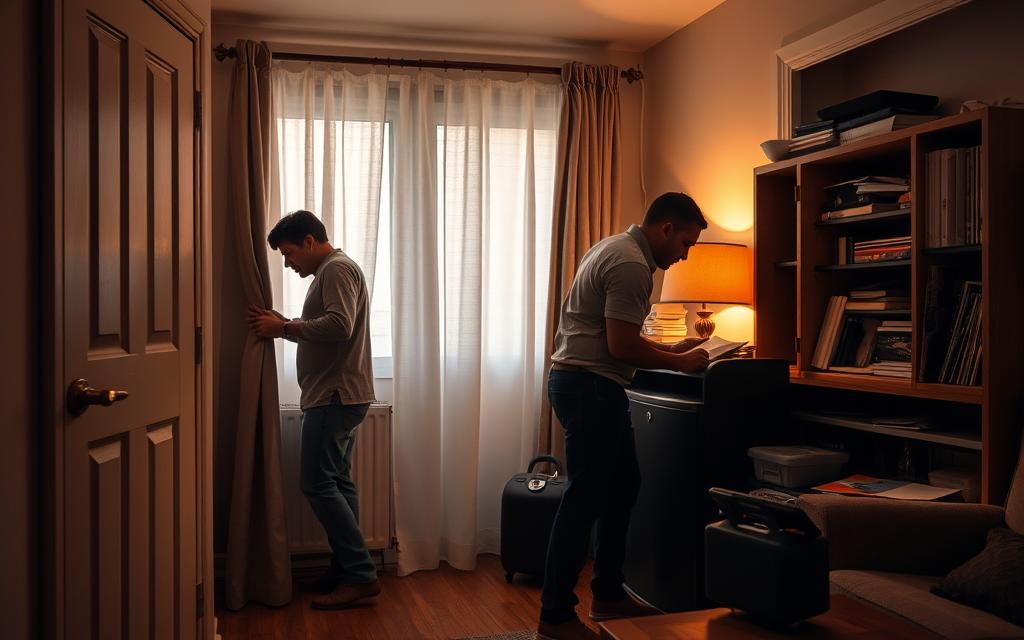
Open Dialogue with Property Owners
Initiate a written conversation using certified mail or email. State specific incidents and reference lease terms about access rights. Keep copies of all correspondence for future evidence.
| Communication Method | Effectiveness | Best Use Cases |
|---|---|---|
| Formal Letter | Creates paper trail | First-time violations |
| Email Follow-Up | Quick documentation | Ongoing discussions |
| In-Person Meeting | Immediate resolution | Minor misunderstandings |
Legal Resources and Support Networks
Consult tenant-rights attorneys if issues persist after written notices. Many states offer free legal clinics through housing authorities. Nonprofits like LawHelp.org connect renters with local advocates.
Security Enhancements
Install deadbolts with written permission or use portable door alarms. Review insurance policies to cover personal belongings. Always check state laws before changing locks.
- Photograph property condition monthly
- Share concerns with neighboring tenants
- Request lease addendums about entry protocols
Persistent problems may warrant small claims court for privacy violations. Document every interaction and explore mediation services before escalating disputes.
Conclusion
Understanding your rights transforms how you protect your living space. State laws require written notice – typically 24-48 hours – before landlords access rental units. Emergency repairs remain the only exception to this rule.
Document every unexpected entry. Record dates, take photos, and save communications. These steps build evidence if disputes escalate. Clear lease reviews help identify improper access patterns early.
Tenants hold multiple solutions when privacy boundaries break. Start with formal letters outlining violations. Escalate to housing authorities or legal counsel if issues persist. Many states offer free tenant advocacy services for guidance.
Review your rental agreement annually. Update security measures like door alarms with written approval. Proactive communication often resolves conflicts before court action becomes necessary.
Your home deserves respect. Stay informed about local laws, maintain organized records, and consult attorneys when rights feel threatened. Knowledge remains the strongest shield against unauthorized property access.